Conscious Untangling
My Marriage Ended. That Doesn’t Mean It Failed.
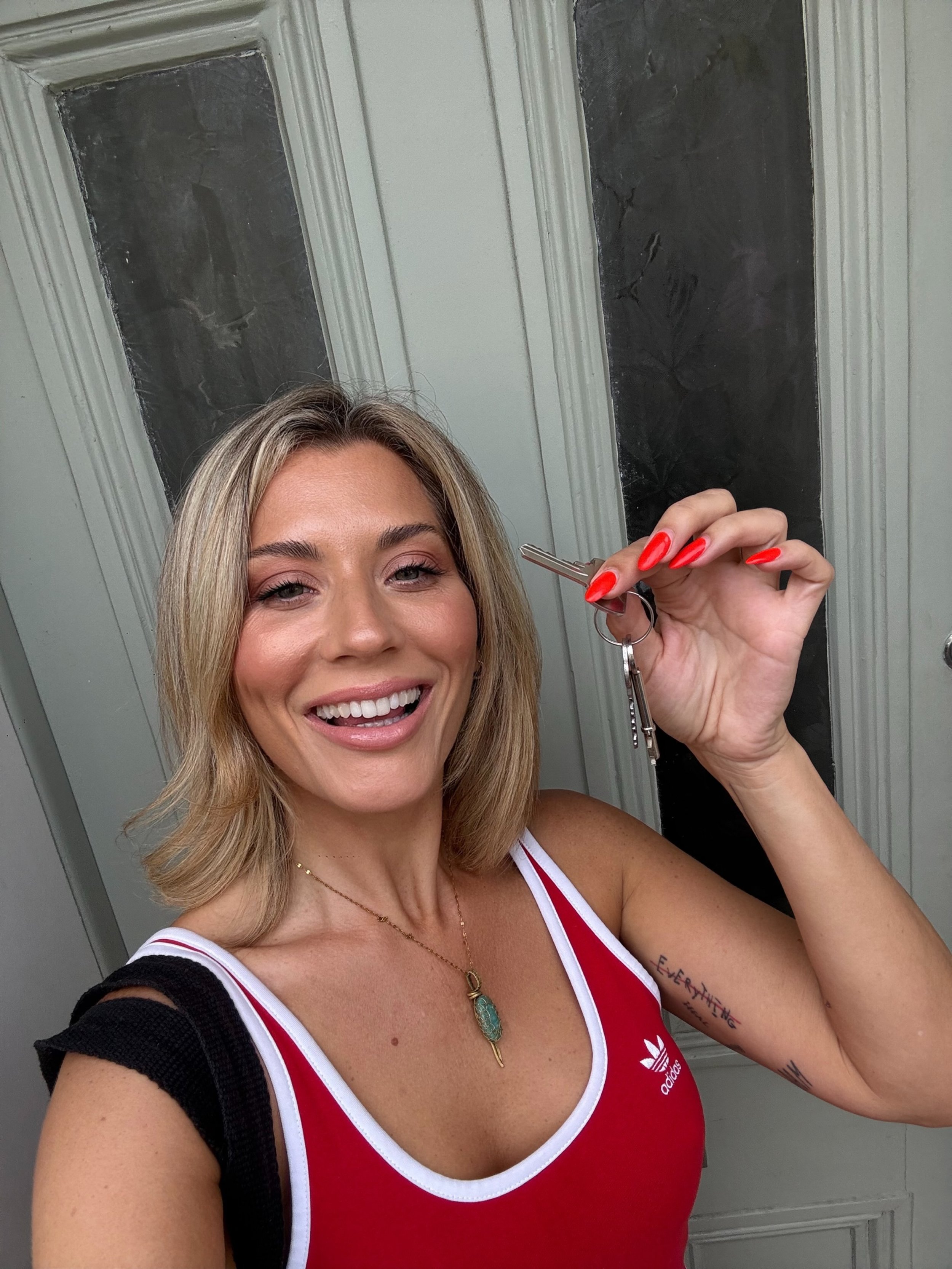
Today I got the keys to my new home.
For the first time since I was 25, I’m going to live on my own.
Technically, I did live alone for about a month back then, but my anxious attachment had other ideas, so I’m not sure it counts.
And while this should probably be a piece about new beginnings, I’ve found myself thinking a lot about endings.
Specifically, about why we are so quick to call the ending of a marriage a failure.
We grew together for more than 20 years.
We loved each other. We raised an incredible daughter. We built businesses and lost businesses. We made money and lost money. We travelled. We experimented with different relationship structures. We made mistakes. We hurt each other. We forgave each other. We changed.
And eventually, we became two people who could acknowledge that the marriage no longer worked and begin the extraordinarily complicated process of setting each other free.
Some people call it conscious uncoupling.
I think I prefer conscious untangling.
Because after 20 years, you’re not simply coupled.
You’re tangled.
Your finances, families, friendships, parenting, memories, routines, Christmases, belongings, traumas, in-jokes and identities have all become woven together.
You can’t just announce that the romantic relationship has ended and expect all those threads to magically separate.
You have to untangle them.
And sometimes, you have to do that while still living in the same house.
Redesigning a relationship while living inside the old one
We separated romantically and emotionally around two and a half years before we physically separated.
We chose to continue living together and co-parenting from the same home while our daughter adjusted to the changing shape of our family.
I want to be really clear about something.
This wasn’t the easy option.
There is something incredibly strange about designing a new relationship with somebody while still living inside so much of the structure of the old one.
You’re used to the old roles.
You’re used to relating in the old ways.
You’re used to certain expectations, entitlements and responsibilities.
Then suddenly you’re being asked to understand that the person sitting opposite you at the kitchen table is no longer your partner.
What are you allowed to ask of each other now?
Who is responsible for what?
How much do you tell each other?
What happens when somebody starts dating?
What does privacy look like when you share a hallway?
What does independence look like when you’re still sharing a fridge?
You have to create new boundaries while surrounded by constant reminders of the old ones.
And inevitably, you get it wrong.
Sometimes you slip back into feeling like husband and wife.
Sometimes you expect something from the other person that they’re no longer responsible for providing.
Sometimes you realise they’re still expecting something from you that you’re no longer willing to give.
Sometimes you behave like co-parents.
Sometimes like housemates.
Sometimes like old friends.
Sometimes like two people who desperately need to get away from each other.
There isn’t really a rulebook for this.
You’re designing the relationship while you’re living it.
And it doesn’t always feel fair
One of the hardest parts is accepting that separation rarely feels completely equal.
One person might have a new partner who offers emotional support, somewhere else to sleep and a different home they can escape to.
The other might deliberately choose to remain single.
That creates an imbalance.
One person may have somewhere they can go to recharge, sleep, be looked after or simply have a night where they don’t have to parent.
The other person may remain in the family home, surrounded by the washing, the school bags, the cats, the dishes and the emotional residue of the life you’re both trying to dismantle.
And sometimes that feels deeply unfair.
Because it is unequal.
But unequal doesn’t always mean wrong.
Sometimes it’s simply reality.
One of the things separation asks us to confront is that we can no longer expect our former partner’s choices to create equality for us.
We have to begin building that for ourselves.
And that can be bloody hard.
The grief doesn’t disappear because you chose the ending
There is another strange assumption that if you wanted the separation, or agreed with it, somehow you don’t get to grieve it.
You absolutely do.
I deliberately chose to give myself space before entering another serious relationship.
I wanted to know who I was outside of being somebody’s wife.
I wanted to build a life rather than immediately build another couple.
And because I didn’t have another romantic relationship cushioning that transition, sometimes the grief hit me with absolutely nowhere to hide.
Including, memorably, crying my eyes out during a spin class.
A friend later pointed out that technically this was exorcise.
Which, frankly, is the sort of friendship everyone needs during a divorce.
Because there have been moments that felt like emotional bombshells.
Information lands.
Something changes.
A conversation happens that you weren’t prepared for.
And then you have to go home and pick up the pieces yourself.
That part has been incredibly hard.
But I’ve also learnt something important:
Being without a romantic partner is not the same thing as journeying alone.
These years have given me some of the deepest friendships of my life.
They’ve given me adventures, experiences, festivals, conversations, travel, dancing, crying, ridiculousness, connection and community.
I’ve discovered ways of being held that have nothing to do with romantic partnership.
And I’ve grown in directions I don’t think I could have grown while I was still inside the nuclear family dynamic.
There is grief in leaving.
But there can also be an enormous expansion.
So what does a successful relationship actually look like?
Perhaps this is the question I’ve been left with.
Because culturally, we seem to have decided that longevity is the ultimate relationship achievement.
Stay married and you succeeded.
Divorce and you failed.
But I don’t believe that.
A marriage lasting 50 years tells me how long it lasted.
It doesn’t tell me how loved either person felt inside it.
It doesn’t tell me whether they grew.
Whether they felt free.
Whether they were respected.
Whether they were lonely.
Whether they stayed because they wanted to or because leaving felt impossible.
And equally, the ending of a 20-year marriage doesn’t erase the 20 years that came before it.
So perhaps the better questions are:
Did we love?
Did we grow?
Did we care for each other?
Did we create something meaningful together?
Did we learn?
And when the relationship could no longer hold the people we were becoming, could we find a way to change its shape?
Sometimes love means staying.
Sometimes love means leaving.
And sometimes love means spending two and a half years painstakingly working out how to become something entirely different to each other.
And now, 100 doors up…
Which brings me back to those keys.
My new home is about 100 doors up the same road.
Not exactly the dramatic divorce fantasy of disappearing to Bali and reinventing myself.
Although obviously, give me time.
Instead, we’ve designed something that works for the family we actually are.
Our daughter can move easily between our homes.
If someone forgets a piece of school uniform, we can pop back and get it.
If one of us runs out of an ingredient, it’s easy to nip between houses.
She doesn’t have to experience Mum’s life and Dad’s life as two completely separate universes.
We’re not trying to recreate the nuclear family.
And we’re not trying to destroy the family we had.
We’re redesigning it.
That distinction feels important to me.
Leaving my marriage taught me more about relationships than marriage did
Which is perhaps the great irony of all of this.
I learnt an enormous amount from being married.
But I think leaving, untangling and redesigning it taught me even more.
I’ve learnt about boundaries.
Autonomy.
Attachment.
Possession.
Grief.
Friendship.
Parenting.
Repair.
Letting go.
I’ve learnt that love can remain even when compatibility doesn’t.
That you don’t have to turn someone into a villain in order to justify leaving them.
That you can acknowledge the hurt without erasing the love.
And that a relationship can end without everything that happened inside it becoming meaningless.
Most importantly, I’ve learnt that there isn’t one correct way to make a family.
There are simply human beings trying to design relationships that fit the people they’ve become.
One of my clients recently said to me:
“No one designs life quite like you.”
I’ll take that.
Because perhaps that’s what this whole chapter has been about.
Designing.
Trying something.
Getting bits spectacularly wrong.
Changing the blueprint.
Laughing.
Crying.
Feeling all of it.
And continuing to build.
Today I have the keys to a new home.
A new house.
A new direction.
A new version of family.
And a new version of me.
I can be excited about where I’m going without condemning where I’ve been.
My marriage ended.
That doesn’t mean it failed.
Sometimes an ending isn’t evidence of failure.
Sometimes it’s evidence that two people were brave enough to stop asking an old relationship to contain who they had become.
And brave enough to design what comes next.
This experience inevitably informs the way I work as a therapist.
I work with people navigating the messy middle of significant life transitions: separation, divorce, changing relationship structures, identity shifts, co-parenting, dating again, choosing not to date, and those periods where you know the old version of your life no longer fits but you don’t yet know what the new one looks like.
Therapy doesn’t have to be about telling you whether to stay or leave.
Sometimes the work is helping you hear yourself clearly enough to decide.
Sometimes it’s grieving.
Sometimes it’s boundaries.
Sometimes it’s understanding why letting go feels impossible even when you know something needs to change.
And sometimes it’s helping you design a relationship or a life that doesn’t look like the template you thought you were supposed to follow.
You don’t have to know what comes next to begin untangling what no longer works.
And you don’t have to journey through that transition alone.
The hard parts will still be hard.
But if we can learn to laugh, cry, grieve and actually feel our way through them rather than trying to bypass them, there is an extraordinary amount of life waiting on the other side.
Apparently, mine starts about 100 doors up the road. 🔑